
Film Match Spectra
Let me introduce you to a new way of thinking about film emulation
Spectral Simulation
I’m very excited to present you something I’ve been working on for quite a while. A spectral simulation of a film system based on the published datasheets from Kodak.
Sounds confusing? Let me clarify
Admittedly, this one is really nerdy. But it is honestly one of the coolest and most exciting things I’ve done in film emulation.
FilmMatch Spectra introduces an entirely new way of building film emulations; a process that actually starts before the image even becomes an image.
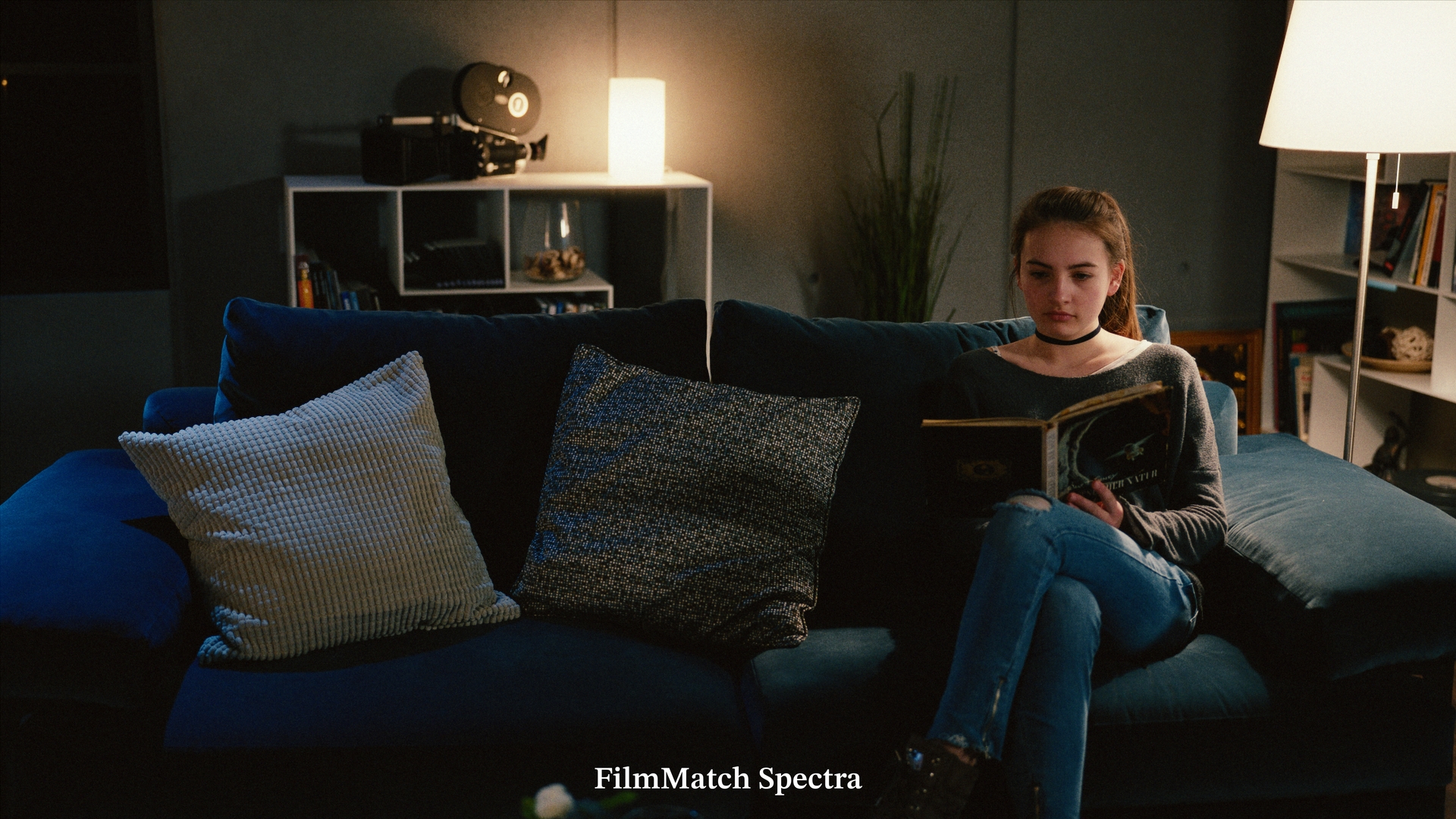





With Film Match Spectra, we left the test charts behind and went straight to the source: Kodak’s published technical data.
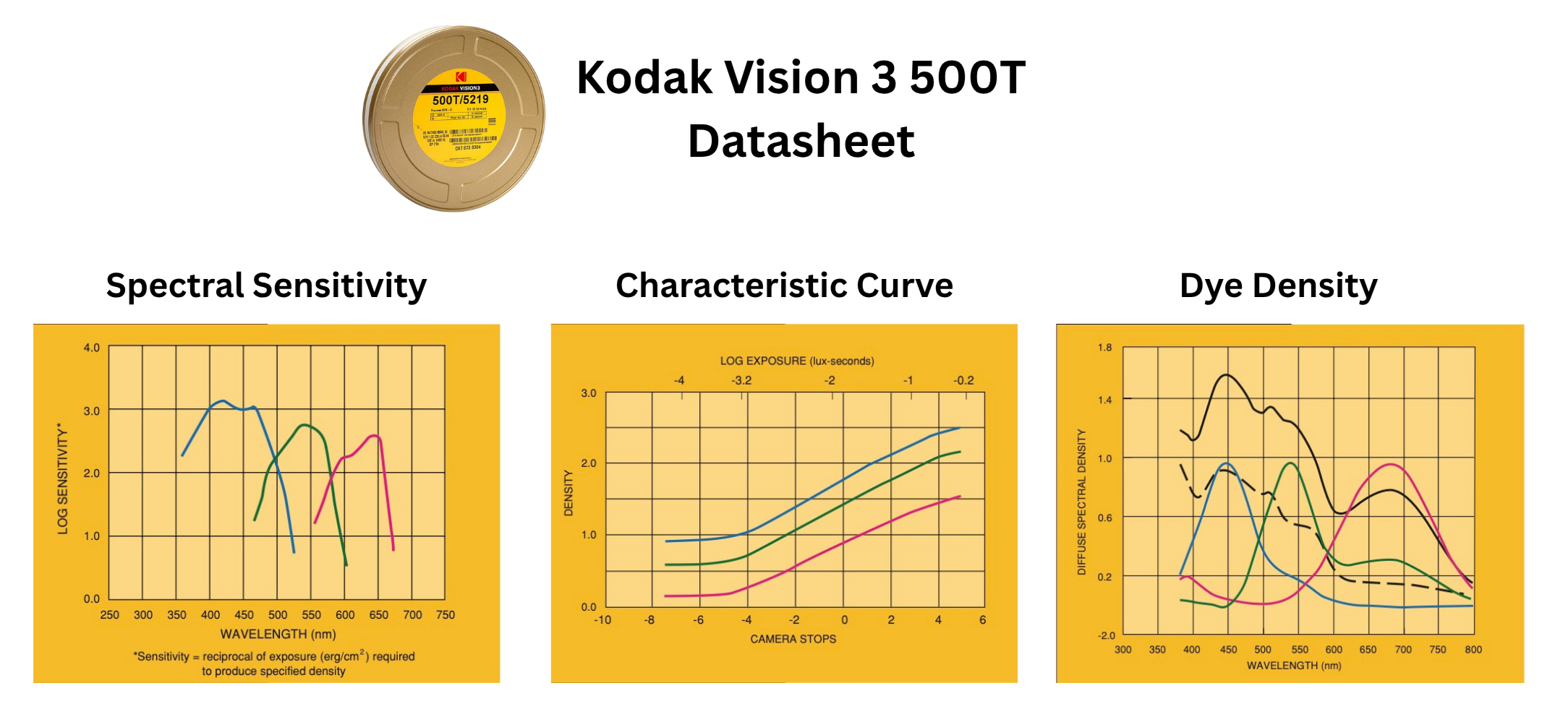
Kodak publishes a surprising amount of information in its data sheets about how the stocks behave across the pipeline. Spectral sensitivities, characteristic curves, dye behavior, for both negatives and print stocks...all of that gives us a way to build a grounded model of the photochemical system. By calculating exactly how a digital sensor and actual film stocks respond to light at every single wavelength across the visible spectrum, we completely recreated the photochemical pipeline in a digital simulation.
Instead of only pointing a film camera and a digital camera at a scene, measuring the result, and treating the film system like a black box, I simulated the stimuli itself, let film and digital observe that same stimuli, and then use ColourMatch to match the digital camera response to the film response.
FilmMatch Spectra is not about making things more complicated for the sake of it. It is about building a much stronger foundation so that the final emulation has a better chance of being accurate, stable, believable, and most of all allows you to make better pictures.
The images below show the color transformation from Film Match Spectra and the Arri Rec709 LUT as a comparison, straight out of the box; NO GRADING PERFORMED.
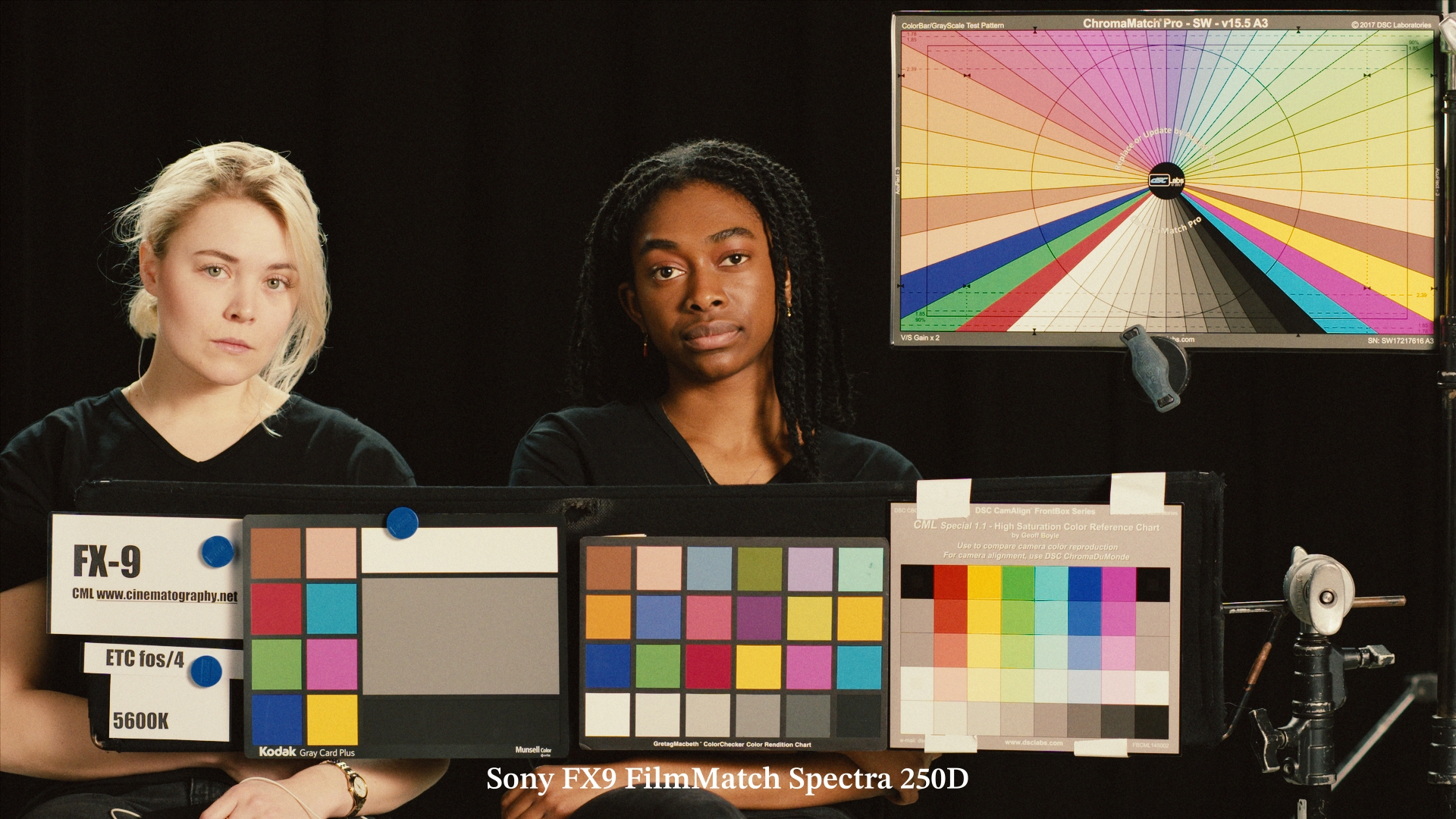
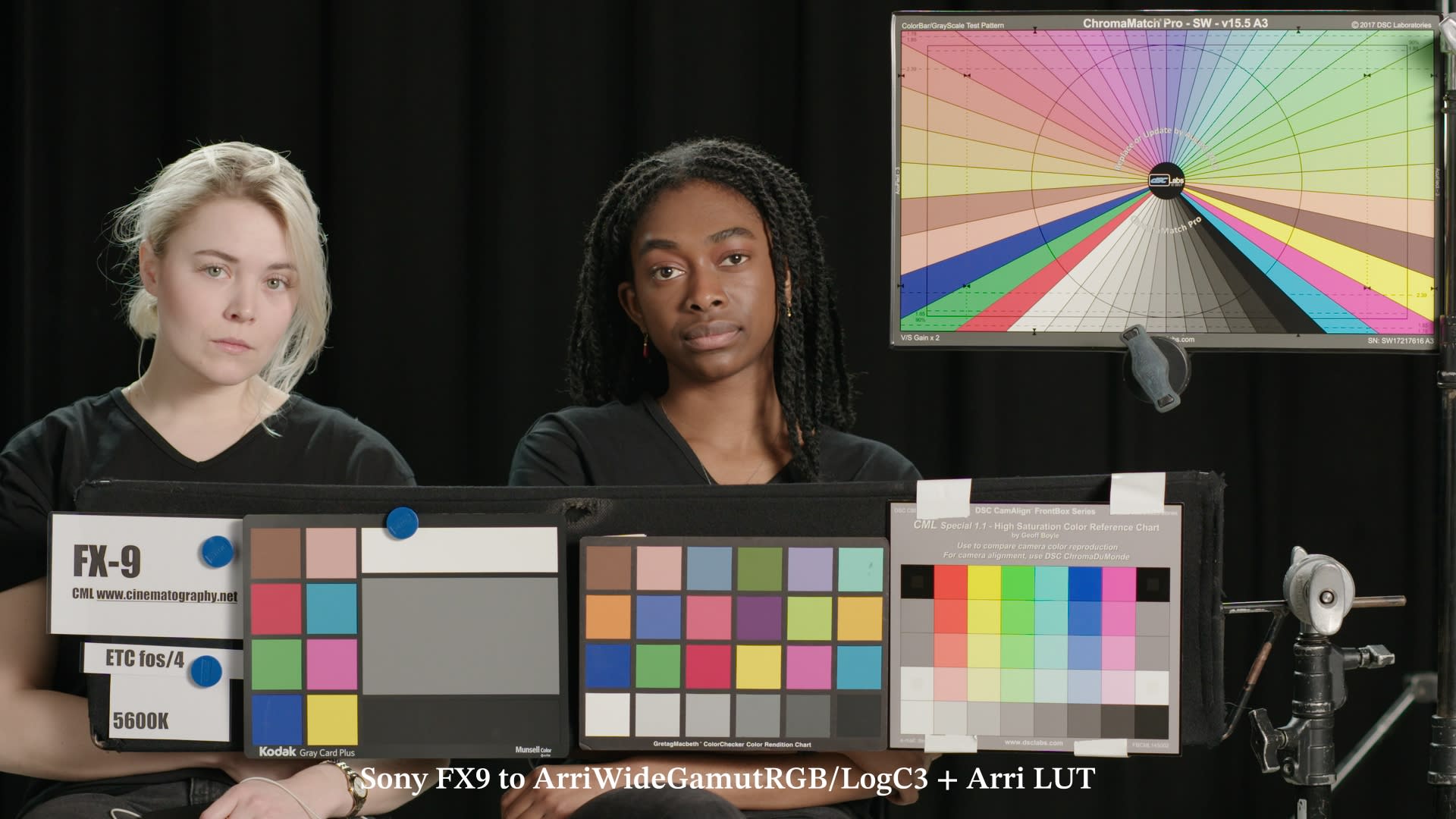
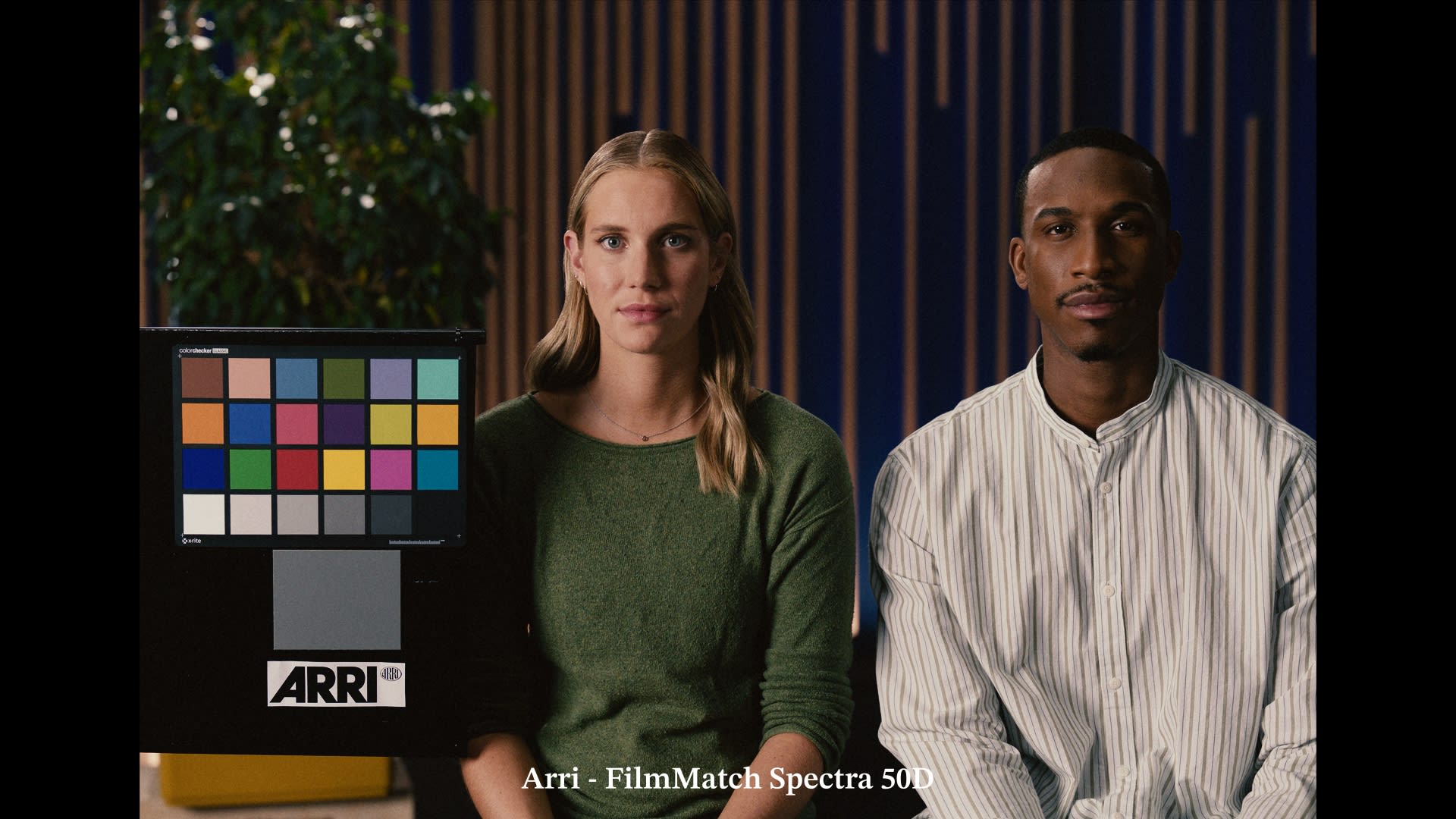


This is the core idea:
1. build a spectral stimuli from the light source and the reflectance of an object
2. let a film system respond to a variety of stimuli
3. let a digital camera respond to that same variety of stimuli
4. use a powerful color matching algorithm like ColourMatch to map one to the other
FILM SYSTEM

It is built from the way light interacts with the world, the way Kodak negative and print stocks respond to that light, and the way a digital camera sees the same light.
To me, that is where this gets really cool, because we are modeling how the medium itself sees the world. If you want to read more about the spectral path and concept behind Film Match Spectra you can find more info here
WHAT’S INCLUDED WITH THE DOWNLOAD?

LUTs:
- Kodak 50D, 250D, 200T, 500T in 2 saturation levels (saturation levels defined by the DIR Couplers development in the negative).
NB: All LUTs include negative and 2383 print. The print part is identical for every negative, as it would be in the photochemical system. The Kodak 2383 print is also based on the official Kodak data sheet. Negative and Print together represent the complete film pipeline.
Texture:
The PowerGrade for DaVinci Resolve includes, Grain, Halation, Flicker and Gate Weave.
NB: The grain layers are provided through an external download link as their size is too massive to be included as a file download here. The grain layers consists of 5 .mov files of around 2.2 gb each. Why 5? They represent the grain behavior at different film densities (exposures) and they are carefully composited onto the image, each in their appropriate Luminance range to create an exposure dependent, organic grain behavior. You can read more about my grain generation workflow and compositing method here.
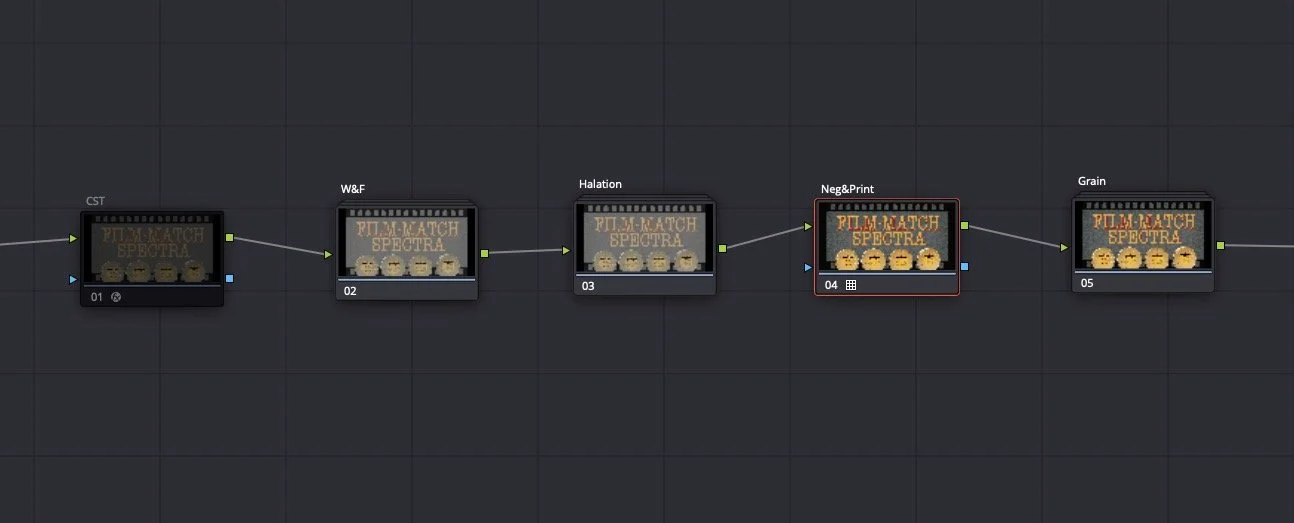
The purpose of the power grade is to make it easy for you to apply the textural qualities of the film system without changing the way you normally grade. That’s why I kept it simple and flexible, so you can build upon it expand it. You can even use it at a group or timeline level so that you can use your favorite node tree at the clip level.
Here is a showcase of FilmMatch Spectra on moving images
FilmMatch Spectra introduces an entirely new way of building film emulations; a process that actually starts before the image even becomes an image. FilmMatch Spectra is built from the way light interacts with the world, the way Kodak negative and print stocks respond to that light, and the way a digital camera sees the same light.
OVERVIEW & INSTALLATION
FAQ
What camera does it support?
It can be used with any camera that is supported by DaVinci Resolve through a Color Space Transform (CST).
The LUTs have been built starting from Sgamut3.cine/Slog3 but as you can see from the sample images it behaves perfectly with any camera using a CST.
What color space do the LUTs output?
Every LUT outputs Rec709 gamma 2.4
Are the sample images graded?
No, the sample images above don’t have any color correction applied. What you see is the FilmMatch Spectra pipeline and the Rec709 Arri LUT for comparison, straight out of the box.
How is middle grey handled?
Every 2383 Print in the simulation has been calibrated to the Kodak LAD aims with a Status A densitometer response. Kodak states that a 16 % reflective grey card should produce a Status A values of 1.09, 1.06, 1.03 on the positive print.